
The Transformative Power of stories
Insights from The Mother and Sri Aurobindo
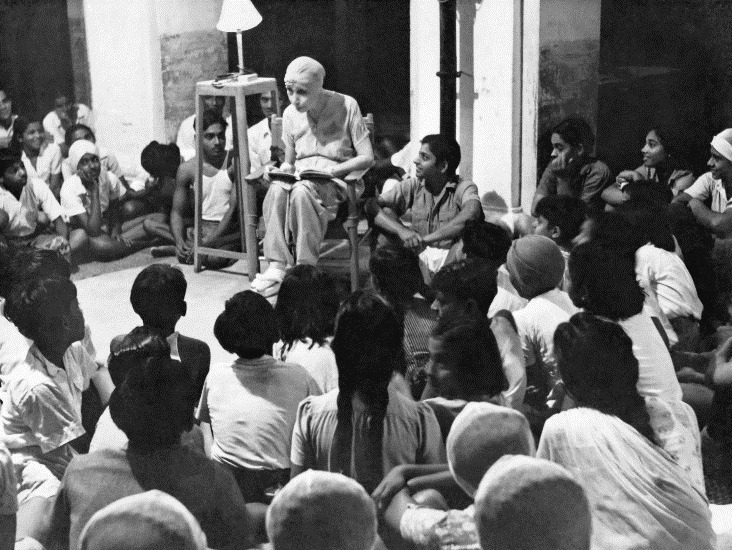
The Mother and Sri Aurobindo emphasized the evolution of consciousness and the significance of inner growth. Stories, in this view, act as carriers of deeper truths, shaping a child’s inner world by awakening higher faculties of intuition, will, and aspiration. The Mother used stories not just for moral education but as tools for spiritual awakening, encouraging children to see themselves as evolving beings with limitless potential.
For The Mother, storytelling was not just an educational tool but a means of connecting with the soul’s higher purpose. She believed that children could imbibe profound spiritual values through narratives that resonated with their inner truth. Stories with symbolic elements could awaken a child’s innate wisdom, fostering qualities such as sincerity, patience, perseverance, and faith. Through carefully chosen tales, children could transcend superficial conditioning and align themselves with deeper spiritual aspirations.
Sri Aurobindo’s vision of integral education aligns with storytelling as a means of self-discovery. His philosophy asserts that education should not merely impart knowledge but should nurture the soul’s evolution. Stories serve as a bridge between the inner and outer worlds, helping children navigate their emotions, aspirations, and challenges. Mythological and allegorical storytelling, often found in Indian traditions, reflects deeper psychological and spiritual processes. By engaging with such narratives, children internalize values such as courage, sincerity, faith, and perseverance, moving beyond rigid moral instruction toward a lived, experiential wisdom.
Additionally, The Mother encouraged storytelling as a way to cultivate aspiration and concentration in children. When a child listens to a story imbued with higher truths, they are drawn into a state of receptivity where transformation becomes possible. The imagination sparked by stories allows children to visualize their potential and develop the willpower to act upon it. This inner movement of consciousness, inspired by meaningful narratives, aligns with Sri Aurobindo’s idea of psychological and spiritual evolution.
Stories serve as bridges between the conscious and subconscious, allowing transformative insights to unfold organically. When a child listens to or participates in storytelling, they engage with symbols and archetypes that resonate with their inner journey. Whether through the hero’s quest, the challenges of an honest protagonist, or the triumph of perseverance, these narratives leave a deep imprint on the child’s psyche, encouraging them to embody these qualities in real life.
References
- The Mother. (1972). On Education. Sri Aurobindo Ashram Trust. Retrieved from Mother & Sri Aurobindo Archives
- Sri Aurobindo. (1949). The Human Cycle: The Psychology of Social Development. Sri Aurobindo Ashram Press. Retrieved from https://ijrar.org/papers/IJRAR21A1180.pdf
- Sri Aurobindo Institute of Culture.Sri Aurobindo’s Vision of Integral Education. Retrieved from https://www.sriaurobindoinstitute.org/saioc/educational/integral_education
- Sri Aurobindo. (1950). Savitri: A Legend and a Symbol. Sri Aurobindo Ashram Press. Retrieved from Sri Aurobindo Ashram
- The Mother. (n.d.). On Concentration, Interest and Attention. Renaissance – Sri Aurobindo Society. Retrieved from https://renaissance.aurosociety.org/on-concentration-interest-and-attention/
- Kireet Joshi. (2006). Education for Character Development: Insights from Sri Aurobindo and The Mother. Auroville Foundation.
- Institute of Human Study – Sri Aurobindo Philosophy. Sri Aurobindo’s Vision for Integral Perfection Through Education. Retrieved from https://philosophy.institute/philosophy-of-sri-aurobindo/sri-aurobindo-integral-education-vision